The Luxor Folk Arts Troupe
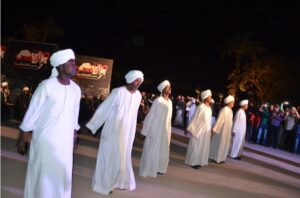
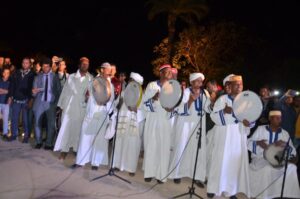
is one of the troupes affiliated with the General Authority for Cultural Palaces. The troupe’s performances feature folk music and dance that reflect the cultural heritage of Luxor Governorate. Its musical instruments include the mizmar baladi, the rababa and the tambourine. Its founder is the artist Ahmed Abdel Razeq, a former member of major troupes (such as the Rida Troupe), which helped build the troupe professionally from the outset. In its dance performances, the troupe is keen to highlight the folk and cultural heritage of Luxor Governorate, presenting artistic scenes that reflect the characteristics of the Upper Egyptian environment, alongside Pharaonic and Nubian influences found in a number of villages, in a harmony that brings these diverse elements together within a single artistic framework
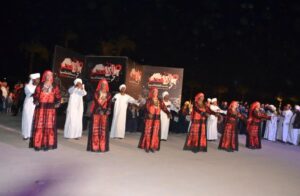
The troupe comprises around 40 talented young male and female dancers, who have presented artistic performances inspired by the heritage of their ancestors, successfully engaging and moving the audience. They are accompanied by a musical ensemble featuring outstanding musicians with clear artistic expertise and a strong stage presence.
The troupe’s performances include a diverse range of notable shows and dances, the most prominent of which are: the Pharaonic ‘Wafa al-Nil’, the Upper Egyptian, the Peasant, the Woodcutting, the Gazawi, and the dances of joy (Al-Kaf), alongside the Nubian, the Sinawi, the Hajala and the Alexandrian, as well as the Tanoura featuring girls and young men, and acrobatic segments such as ‘Hassanein and Mohamadeen’ and ‘The Horse’. The troupe also presents a number of operettas and theatrical performances, including ‘The Night of Muhammad’, ‘Jerusalem, Flower of Cities’, and ‘The Joy of Luxor’.
The troupe has participated in a number of prominent events both within Egypt and abroad, including the celebration of the sun’s alignment with the face of King Ramses II at the Temple of Abu Simbel in Aswan, as well as the National Woodcarving Festival in Luxor and the International Rowing Festival, alongside the ‘Kuwaiti Days in Egypt’ in the same governorate, and the sun alignment ceremony at the Karnak Temple Complex. Its performances have also extended to a number of countries, including France, China, Malaysia, Tunisia and others
The troupe was founded as a social experiment seeking to demonstrate the possibility of presenting folk dance within a conservative society characterised by sensitivity towards girls’ participation in the arts. From the outset, it was clear that Abdel Razeq understood that establishing a troupe in Luxor did not rely solely on the stage, but also required gaining the trust of families and navigating the customs and traditions prevalent in the local community.
The troupe’s founder’s priority was to build trust with the surrounding community; he therefore established clear guidelines for the girls’ travel between home and the rehearsal venue, which is sometimes accompanied by a family member. This approach helped to foster a sense of security among families, making the troupe a trusted environment before it was merely an artistic space.
Ahmed Abdel Razeq took charge of most of the troupe’s artistic aspects, from choreographing the dances to directing the performances and collaborating directly with the musicians. The diversity of the dance pieces encompassed Pharaonic, Upper Egyptian, peasant and Nubian styles, alongside forms of stick dancing, including the Ghawazi. To achieve this, Abdel Razeq ensured direct contact with the living sources of these arts, sitting with genuine practitioners —including some ghawazi—to acquire the authentic techniques, before reinterpreting them in a distinctive theatrical style. He also collaborated with musicians to compose new songs and pieces designed specifically to complement the rhythmic movements and dance sequences, rather than relying on existing works Despite the intensity of the rehearsals that took place throughout the day, the financial return remained limited; nevertheless, the motivation was not so much financial as it was driven by passion, a love of travel, and a sense of belonging to a unique collective experience. This is confirmed by Ayman Abdel Rahim, one of the troupe’s longest-serving dancers, who explained that his connection to the troupe stemmed from his love of folk dance, seeing it as an authentic means of expressing a history and cultural heritage that has remained alive despite changing circumstances.