Andalusia: Muwashahat Dances
Andalusian muwashahat are considered one of the most distinguished arts that flourished in Arab palaces during the Islamic Caliphate, especially after the conquest of the Iberian Peninsula. Muwashahat remained closely connected to Andalusia from their emergence and continued to gain fame later in North Africa. This was the result of the cultural interaction between Arab and European cultures, which contributed to the creation of this new poetic form that later became associated with Arabic poetry.
Muwashahat are a form of lyrical poetry that appeared in Andalusia around the 10th century. They are distinguished from traditional Arabic poetry by their structure, rhyme, and musical rhythm, and they were performed with music and singing. One of the most influential figures in the development of this art was Ziryab, who greatly influenced music and artistic taste in Andalusia.
Origin of Muwashahat Dance
The origins of Muwashahat dance date back to the 10th and 11th centuries, when muwashahat emerged as a new poetic form different from traditional Arabic poetry. This art was characterized by its musical rhythm and varied rhymes, which made it suitable for singing and artistic performance.
The Andalusian poet Muqaddam ibn Mu’afa al-Qabri was among the first to contribute to the emergence of this poetic style during the late 9th and early 10th centuries.
The Role of Music in the Development of Muwashahat
The famous musician Ziryab played an important role in developing Andalusian music by introducing new melodies and rhythms and organizing musical gatherings in palaces. As a result, muwashahat evolved from poetry that was merely recited into a musical art performed with singing and instrumental accompaniment.
As this art spread throughout Andalusian palaces, simple expressive movements began to accompany the music and rhythm.
The Emergence of the Dance
The early forms of Muwashahat dance appeared in the palaces of Andalusian cities such as Cordoba, Seville, and Granada.
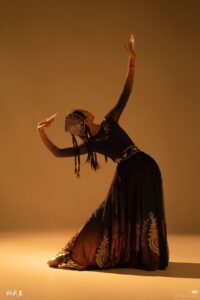
Female singers and performers used graceful hand and body movements to express meanings such as love, longing, and the beauty of nature. Over time, these movements gradually developed into an organized dance style connected to Andalusian music.
Development of Muwashahat Dance
During the 11th and 12th centuries, Muwashahat dance became more organized and was characterized by:
* Graceful and harmonious movements
* Body expressions connected to words and rhythm
* Group performances in some presentations
* An elegant artistic style associated with palaces and cultural gatherings
This dance was known for its elegance, calmness, and emotional expression rather than fast movements.
Traditional Costumes
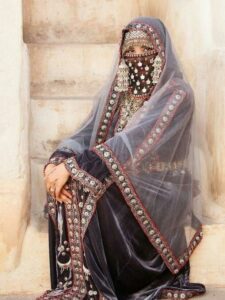
The costumes of Muwashahat dance were inspired by ancient Andalusian fashion and were characterized by:
* Long and wide dresses
* Luxurious fabrics such as silk and velvet
* Gold and silver embroidery
* Wide sleeves
* Light jewelry and sometimes head coverings
These costumes reflected the luxury and elegance of Andalusian palaces.
What Does Muwashahat Dance Express?
Muwashahat dance expresses many emotions and themes, including:
* Love and romance
* Longing and nostalgia
* The beauty of nature, gardens, and the night
* Joy and celebrations
Body movements are used to translate the meanings of the lyrics and express musical emotion.
The Spread of the Art Outside Andalusia
After the Fall of Granada and the end of Islamic rule in Andalusia, many musicians and artists migrated to Arab countries such as:
* Morocco
* Algeria
* Tunisia
* Egypt
* The Levant
They carried with them Andalusian music, muwashahat, and their styles of performance and dance, helping this art spread throughout the Arab world and become part of Arab cultural heritage.
Musical Instruments Used
Among the most important musical instruments used in muwashahat performances are:
* The oud
* The qanun
* The daf
* The ney flute
* The rabab