Origin and development of flamenco
The flamenco originated in Andalusia, southern Spain, as a result of the interaction between multiple cultures, including Arab, Andalusian, Roma (Gypsy), Spanish, and Jewish influences.
Although flamenco reached its modern form between the 18th and 19th centuries, its roots go back much earlier, especially after the fall of Islamic rule in al-Andalus.
How flamenco emerged
After the fall of Granada in 1492, communities such as Moriscos, Roma, and Jews faced persecution and social exclusion. These groups used music, singing, and body expression to express their emotions and suffering.
Over time, Andalusian Arabic music blended with Spanish folk traditions and Roma rhythms, creating a new artistic style based on:
* emotional singing
* strong rhythmic patterns
* body expression
* improvisation and feeling
Expression of pain in flamenco
Originally, flamenco was a way to express sorrow, suffering, and nostalgia.
Movement artists expressed:
* loss of home and identity
* social injustice
* poverty and hardship
* nostalgia for the past
* deep emotional pain
Styles like Soleá and Seguiriyas are known for their deep emotional intensity.
This pain is shown through:
* powerful singing voice
* facial expressions
* strong footwork
* tense movements
Expression of joy and celebration
Later, flamenco also became a festive art used in celebrations, expressing:
* joy of life
* collective celebration
* energy and excitement
* weddings and festivals
Evolution of flamenco dance
Flamenco first focused on singing and music, then simple movements were added and gradually developed into a structured dance based on:
* precise arm movements
* rhythmic footwork
* turns and balance
* facial expression
* musical improvisation
Arabic and Andalusian influence
Flamenco is strongly influenced by Arabic and Andalusian music, visible in:
* musical scales
* complex rhythms
* melodic singing style
* traditional instruments
The musician Ziryab played a key role in shaping Andalusian music, which later influenced flamenco.
Flamenco today
Today, flamenco is one of Spain’s most important cultural arts and is performed worldwide, especially in Sevilla, Granada, and Cordoba.
In 2010, UNESCO recognized flamenco as Intangible Cultural Heritage of Humanity.
Origin of the name
There are several theories about the word “flamenco”:
* derived from “oppressed farmer” referring to Moriscos and Roma
* linked to the flamingo bird
* possible Arabic linguistic roots, though not confirmed
Elements of flamenco
Flamenco consists of three main elements:
* singing (cante)
* dance (movement expression)
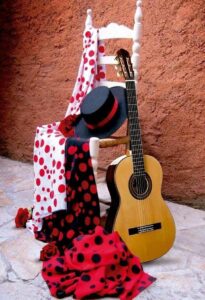
* guitar playing
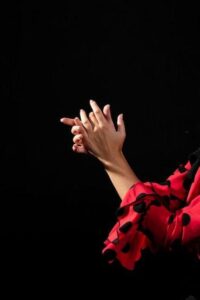
It also includes rhythmic hand clapping (palmas) and percussion like the cajón.
Flamenco dance
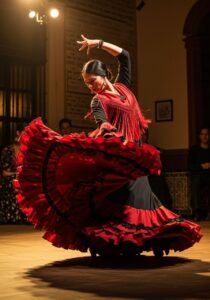
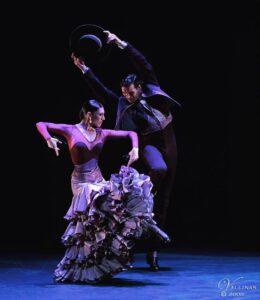
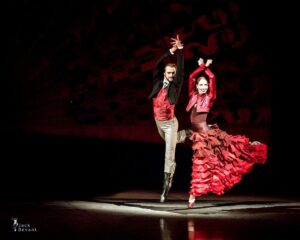
Flamenco dance evolved into a structured performance art in the 18th century. Movement artists express emotions through:
* arms
* legs
* facial expression
* rhythm and balance
It is highly emotional, improvisational, and closely connected to music.
Traditional costumes
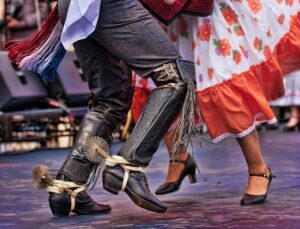
Women wear long, colorful dresses with ruffles, while men wear fitted shirts, black trousers, and special shoes designed for rhythmic footwork.
Flamenco styles (Palos)
Flamenco includes over 50 styles called “palos”.
Main ones include:
* Soleá: deep and melancholic
* Alegrías: joyful and fast
* Bulerías: fast and improvised
* Fandango: traditional and regional
* Tangos: rhythmic and accessible
* Seguiriyas: very deep and sad
* Tientos: slow and serious
Performance spaces
Flamenco is performed in “tablaos”, live venues where artists interact directly with music and audience.
It is also performed in festivals across Andalusia.
Famous movement artists
* Carmen Amaya
* Sara Baras
* Cristina Hoyos
* La Argentina
* Joaquín Cortés
* Antonio Gades
* Farruquito
Flamenco museum
The most important museum is the Museo del Baile Flamenco, dedicated to preserving and promoting flamenco art.